The NIH HPC group plans, manages and supports
high-performance computing systems specifically for use by the
intramural NIH community. These systems include
Biowulf,
a 105,000+ processor
Linux cluster;
Helix, an interactive system for
file transfer and management, and
Helixweb, which provides a number of web-based
scientific tools. We provide access to a wide range of computational
applications for genomics, molecular and structural biology, mathematical and
graphical analysis, image analysis, and other scientific fields.
The continued growth and support of NIH's Biowulf cluster is dependent upon
its demonstrable value to the NIH Intramural Research Program. If you publish
research that involved significant use of Biowulf, please cite the cluster.
Suggested citation text:
This work utilized the computational resources of the NIH HPC Biowulf cluster (https://hpc.nih.gov).
|
Quick Links
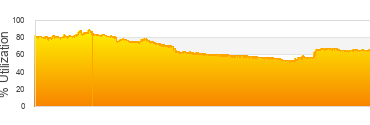
Biowulf Utilization
Saturday, January 3rd, 2026
|
Last 24 hrs
|
|
70,065 jobs submitted
59,944 jobs completed
1,694,986 CPU hrs used
|
22 NIH Institutes
240 Principal Investigators
443 users
|
Announcements
- 17 Dec 2025 : EXTENDED DOWNTIME for Biowulf/HPC systems January 21-26, 2026
- 10 Dec 2025 : REMINDER: Virtual Walk-In Consult with HPC staff today (Wed 10 Dec)
- 8 Dec 2025 : Virtual Walk-In Consult for Biowulf Users (Wed 10 Dec)
- 1 Dec 2025 : Reboots of Helix/Biowulf
- 21 Sep 2025 : HPC systems restored to service following facilities issue
- 21 Sep 2025 : Biowulf scheduling stopped and file systems partially available
- 17 Sep 2025 : TODAY: Biowulf Seminar Series, "Combining Visualization and Computation in Brain Imaging", Paul Taylor, PhD (AFNI Group)
- 17 Sep 2025 : REMINDER: Virtual Walk-In Consult with HPC staff today (Wed 17 Sep)
- 17 Sep 2025 : Reboots of Helix/Biowulf
- 15 Sep 2025 : Biowulf Seminar Series: Paul Taylor, PhD (Director, AFNI Group, NIMH), Wednesday Sep 17, 11am
- 15 Sep 2025 : Virtual Walk-In Consult for Biowulf Users (Wed 17 Sep)
- 12 Sep 2025 : Biowulf Seminar Series: Paul Taylor, PhD, "Examples of Combining Visualization and Computation in Brain Imaging", Wednesday Sep 17, 11am
|
Recent Papers that used Biowulf & HPC Resources
|
A CGG Repeat Expansion in CSNK1E Associated with Progressive Myoclonic Epilepsy with Incomplete Penetrance
Akçimen, F; Alvarez Jerez, P; Guliyeva, U et al.
Mov Disord
, DOI://10.1002/mds.30326 (2025)
Excess CMS morbidity and FEMA declarations: Phenome Wide Association Study of Generalized Linear Model interactions between CMS diagnostic code utilization and FEMA Incident types, 1999-2020
Williams, N
Inform Med Unlocked
, DOI://10.1016/j.imu.2025.101716 (2025)
Artificial intelligence-based models for quantification of intra-pancreatic fat deposition and their clinical relevance: a systematic review of imaging studies
Joshi, T; Virostko, J; Petrov, MS; ,
Eur Radiol
, DOI://10.1007/s00330-025-11808-6 (2026)
 NAT10 promotes cancer metastasis by modulating p300/CBP activity through chromatin-associated tRNA
Amin, R; Ha, NH; Qiu, T et al.
Mol Cell
, DOI://10.1016/j.molcel.2025.11.010 (2025)
Epigenetic dysregulation in aged muscle stem cells drives mesenchymal progenitor expansion via IL-6 and Spp1 signaling
Riparini, G; Mackenzie, M; Naz, F et al.
Nat Aging
, DOI://10.1038/s43587-025-01002-0 (2025)
Response of iPSC-derived neurons from individuals with treatment-resistant depression to (2 R,6 R)-hydroxynorketamine and reelin: an exploratory study
Johnston, JN; Yuan, P; Kadriu, B et al.
Transl Psychiatry
, DOI://10.1038/s41398-025-03724-6 (2025)
 Interlocking host and viral cis-regulatory networks drive Merkel cell carcinoma
Miao, L; Milewski, D; Coxon, A et al.
J Clin Invest
, DOI://10.1172/JCI188924 (2025)
Examination of HLA-DRB1*15-linked candidate antigens in Still's disease with and without lung disease and features of drug hypersensitivity
Kobrin, DM; Brown, DG; Burbelo, PD et al.
J Rheumatol
, DOI://10.3899/jrheum.2025-0522 (2025)
|
|
 All Services Operational